Pay in installments of $7.12 with
 ,
,
 and
and

Shipping Estimate
USA
- USA
- CAN
- USA
- CAN
Ships within 48 hours · Estimated delivery Jun 28 - Jul 3
 Promo Codes Available:
For Your Every Summer RSVP, with Code: SUMMER15
Description
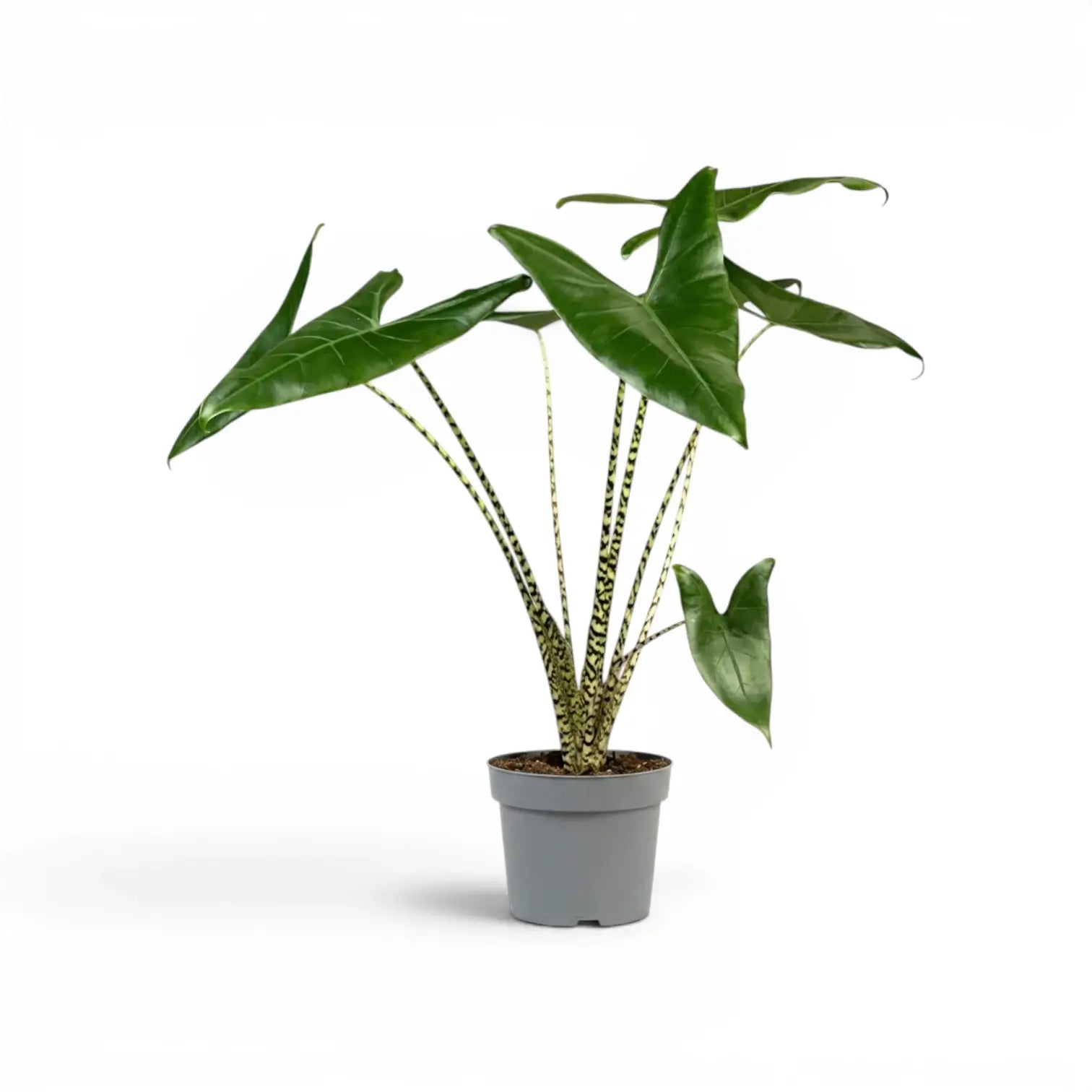
elephant ear zebra plant Alocasia zebrinaAlocasia zebrina Alocasia zebrina is a Philippine species known for pale green petioles marked with irregular dark striping. The leaves are glossy, green and narrow sagittate, but the striped petioles are the plants most distinctive feature. Mature plants grow upright from a corm and can become tall indoors when light, warmth and root space are steady. The leaf blades are smooth and arrow shaped, with pointed front lobes and long tapering rear lobes.
Alocasia zebrina
Alocasia zebrina is a Philippine species known for pale green petioles marked with irregular dark striping. The leaves are glossy, green and narrow-sagittate, but the striped petioles are the plant’s most distinctive feature. Mature plants grow upright from a corm and can become tall indoors when light, warmth and root space are steady.
The leaf blades are smooth and arrow-shaped, with pointed front lobes and long tapering rear lobes. New leaves emerge as folded spears, rise on their petioles, then open into glossy green blades. This growth pattern means the plant often gains height before it gains width. The corm sits at the base of the plant and produces both roots and new shoots; mature plants can also form offsets or small corms around the base.
Features of Alocasia zebrina
- Leaf shape: glossy narrow sagittate leaves with long rear lobes.
- Petioles: pale green stems with dark brown to dark green irregular striping.
- Growth habit: upright corm-based growth with long petioles.
- Indoor scale: medium to tall once established, depending on light, warmth and root volume.
- Origin: the Philippines, where the species grows in warm rainforest conditions.
Care for Alocasia zebrina
- Light: bright indirect light keeps petioles firmer and helps prevent weak stretched growth. Gentle morning sun can suit acclimated plants, but harsh sun can scorch the leaves.
- Water: water thoroughly, then let the upper part of the substrate dry before watering again. The corm performs best when periods of moisture are followed by airflow through the substrate.
- Substrate: use a loose aroid mix with bark, pumice or perlite, coco fibre and a small moisture-retentive fraction. The mix should stay open around the corm.
- Humidity: around 60–80% humidity supports smoother leaf expansion and fewer dry edges, but stable care matters more than chasing exact numbers.
- Temperature: keep the plant warm, ideally 20–28 °C. Cold conditions slow root and shoot growth quickly, especially if the pot is damp.
- Feeding: feed moderately during active growth with a diluted complete fertiliser. Overfeeding can leave salts in the substrate and mark the leaf edges.
- Potting: mature plants can become top-heavy because of their long petioles. Use a draining inner pot and a heavier outer pot if the plant starts to lean.
- Propagation: separate offsets or corms only when they are firm and show active growth. Young plants establish best in a small airy pot with warmth and humidity.
Common issues with Alocasia zebrina
- Sudden drooping: can follow dry roots, saturated lower mix, cold exposure or transport stress. Check the substrate before adding more water.
- Long weak petioles: usually point to too little light.
- Several yellow leaves: often indicate root stress from excess moisture, cold roots or a tired substrate.
- Crisp leaf edges: dry air, heat stress or salt build-up can damage the glossy blades.
- Pests: thrips and spider mites can appear on leaf undersides and inside newly emerging spears.
Origin and name
Alocasia zebrina grows in warm lowland and lower-montane rainforest environments in the Philippines, where roots remain active in consistently warm conditions. The species was formally described in 1862 and entered cultivation in the nineteenth century. The name zebrina refers to the zebra-like striping on the petioles.
Plant safety
Alocasia zebrina contains irritating calcium oxalate crystals in the leaves, petioles and corm. If plant tissue is eaten or gets into the mouth, it can irritate the lips, tongue, mouth and throat, with drooling, swelling, vomiting or swallowing difficulty possible. Keep it away from pets and children, and wash hands after pruning, repotting or division.
Quick facts
- Botanical name: Alocasia zebrina G.W.Johnson & R.Hogg
- Family: Araceae
- Native range: Philippines
- Growth type: corm-forming Alocasia
- Best for: growers who want a tall Alocasia with striped petioles and clean green leaves
Add Alocasia zebrina if you want a Philippine species with striped stems, glossy arrow-shaped leaves and clear corm-based care cues.
Shipping Notes
- Free Standard Shipping on $100+ Orders to the USA.
- Except Preorder products are shipped in 48 hours.
- Delivery to the USA:
- Standard Shipping : 3-10 business days
- If time is of the essence, please consider selecting expedited delivery for faster service.
Exchange/Return Notes
- We offer a 30-day return/exchange service after receiving.
- Final sale items are not eligible for returns or exchanges.
- To process your return/exchange, please contact us at [email protected]
- Please click here for more details>>> Return & Exchange Policy